Contemporary scholarly publication studio

Research made clearer.
Manuscripts made ready.

Editorial judgement, visible revision and ethical publication support for researchers who want their work to read with authority without losing their own voice.

Copper quill crossing an editorially marked manuscript
Cover study: the manuscript as a living editorial object.

UK Journal Publishing / Editorial Issue No. 01

01

Editor’s note

Publishing support should reveal the argument, not replace the author.

A strong manuscript is not produced by decoration. It is produced by disciplined attention to purpose, evidence, structure, language and the expectations of a particular scholarly audience. UK Journal Publishing approaches each document as an editorial issue with its own logic, readers and constraints.

Our work is deliberately transparent. Revisions are visible, queries are explained and important decisions remain with the author. We do not fabricate data, conceal ethical problems, promise journal acceptance or use an external chatbot to improvise answers about your research.

The result is a controlled publication process: clearer writing, better alignment, cleaner files and a defensible route from draft to submission.

02

Journal table of contents

Editorial departments

Choose a department by the problem in front of you, not by a generic package name.

  1. 01Manuscript EditingStructure, language and submission readinessp. 06
  2. 02Journal SelectionScope fit, indexing and practical constraintsp. 10
  3. 03Peer Review ResponsePoint-by-point revision and editorial alignmentp. 14
  4. 04Submission PreparationFiles, declarations, cover letters and checksp. 18
  5. 05Publication GuidanceEthics, open access, formatting and referencesp. 22
  6. 06Research SupportMethod clarity and responsible reportingp. 26
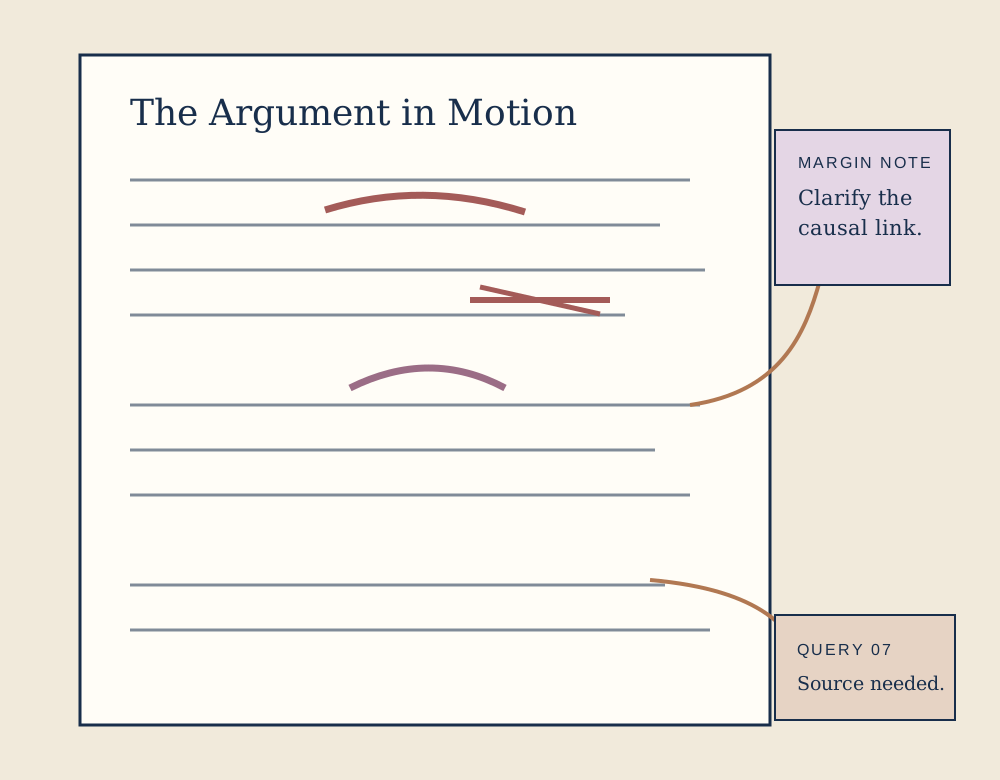
Manuscript page with visible insertions, deletions and margin comments
Visible editorial markup keeps revision accountable.
03

The editing room

Revision you can see, question and control.

Editing is shown as a conversation with the manuscript. We correct what is clear, query what is uncertain and distinguish language problems from research problems.

The findings clearly prove that digital access always improves performance.

The findings indicate an association between digital access and reported performance within the studied sample.

Editor’s note: The revised wording reflects the study design and avoids an unsupported universal causal claim.
  • Structure Does each section perform a clear scholarly function?
  • Evidence Are claims proportionate to the method and sources?
  • Language Is the prose precise, readable and consistent?
  • Submission Does the file meet the target requirements?
04

Four feature articles

Journal pathways

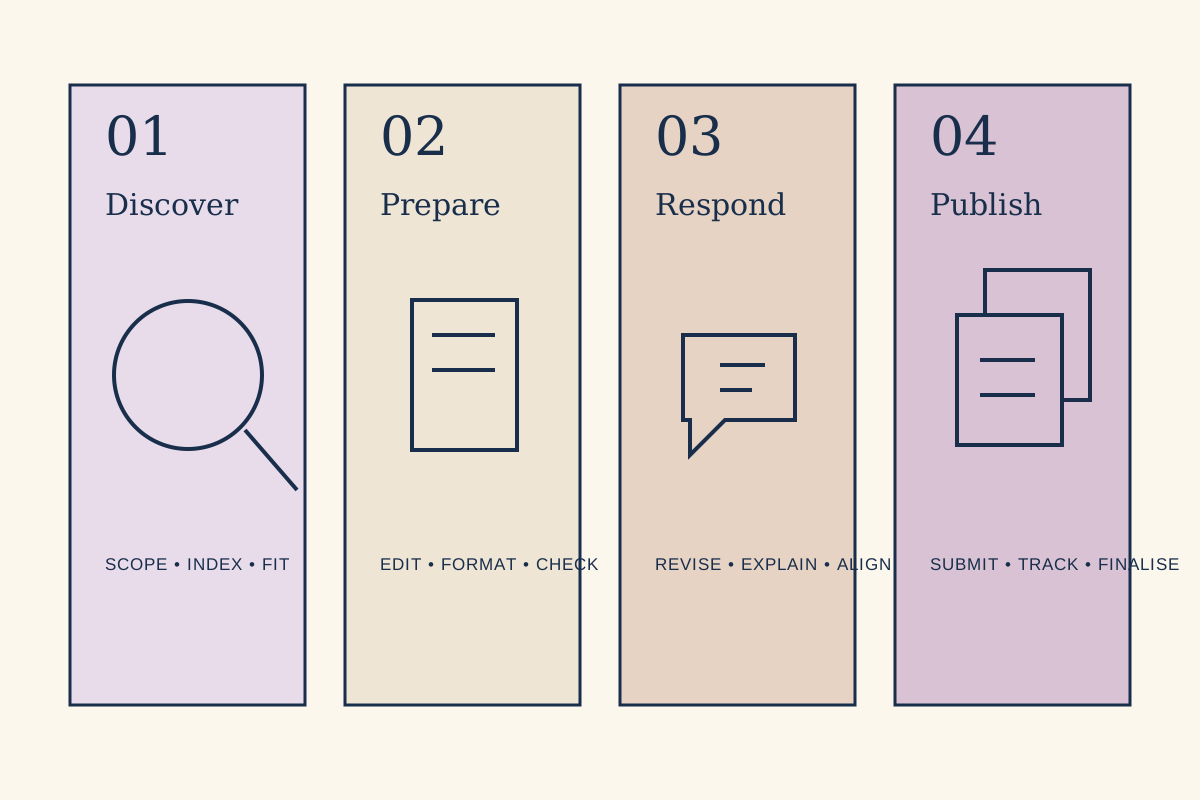
Four distinct editorial moments, each requiring different evidence and decisions.

Four columns showing discover, prepare, respond and publish pathways
Feature 01

Discover the right readership

Journal selection begins with the manuscript’s contribution, scope and article type. Indexing preferences, open-access routes, fees and review timelines are practical filters—not substitutes for intellectual fit.

Request a journal shortlist →
Feature 02

Prepare the complete issue

Submission readiness includes the paper, figures, tables, declarations, references, author details and supporting statements. A technically clean package reduces avoidable desk-return problems.

Prepare submission files →
Feature 03

Respond without losing the argument

Reviewer comments are classified, mapped and answered point by point. Agreement, revision and respectful disagreement each require evidence and accurate reporting of what changed.

Review your decision letter →
Feature 04

Publish with a clear record

Final checks cover proofs, corrections, licences, author approvals and publication files. Every action should remain visible to the author and consistent with journal and institutional requirements.

Consult the publication index →

05

Reader correspondence

What authors value after the red pen.

Pull quotations reflect the qualities a careful editorial relationship should deliver: clarity, control and honest guidance.

“The edits made the argument easier to follow, but the paper still sounded like my research and my voice.”

— Doctoral researcher, social sciences

“The journal shortlist explained fit and risk instead of simply naming high-profile titles.”

— Early-career academic, public health

“Every reviewer point was mapped to a revision, so the response letter became manageable.”

— Research team, engineering
06

Alphabetical academic index

160 locally stored editorial answers

Search the index by service, document type or publication stage. Answers are matched locally through keywords, phrases and synonyms.

Loading the editorial index…

Human editor reviewing a manuscript at an editorial desk
Publication desk

Complex requests are reviewed by a human editor before scope, timing or fees are confirmed.

07

Publication submission sheet

Send the manuscript brief.

Provide enough detail for an accurate editorial assessment. Do not include confidential participant data or account passwords.